Robinhood Just Gave AI Agents Trading Accounts. Here’s the Lesson for Revenue Teams.
A new Robinhood rollout shows where AI agents are heading: from suggestions to action. For B2B teams, the opportunity is real — but only if autonomy comes with guardrails.
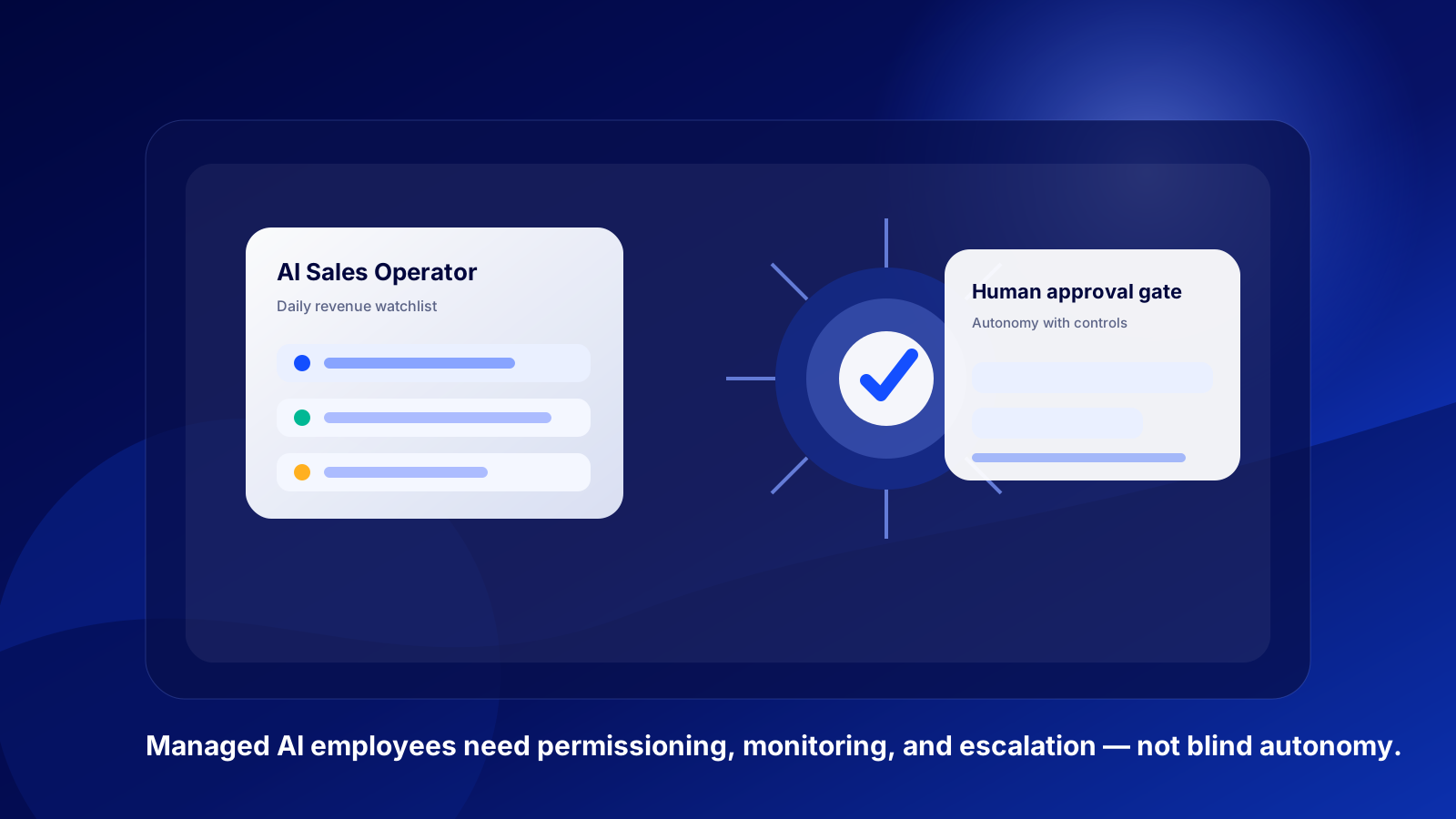
The Verge reported on May 27, 2026 that Robinhood is opening its trading platform to AI agents, letting users create a separate account for an agent and fund it with a specific amount of money so the agent can buy and sell stocks across the market. Source: The Verge, “Robinhood will let your AI agent trade stocks and make (or lose) lots of money” — https://www.theverge.com/ai-artificial-intelligence/938095/robinhood-ai-agent-stock-trading
That headline sounds like a finance story. It is actually an operations story. The important shift is not that an AI can analyze a stock. The shift is that an AI is being handed a budget, a boundary, and permission to act. That same pattern is coming for sales, client success, finance, support, recruiting, and founder operations.
Most companies are still treating AI like a smarter search box. They ask for a summary, a draft, or a brainstorm, then a human does all the real work. The next wave is different: AI agents will monitor systems, detect opportunities, prepare actions, request approval, and eventually execute bounded workflows on their own.
The real question is not whether agents can act. It is where they are allowed to act.
Robinhood's structure is instructive because it separates the agent from the user's main account and forces the user to define how much capital the agent can touch. That is the right mental model for business automation. An AI employee should not inherit unlimited access to your inbox, CRM, bank account, or customer communications on day one.
Instead, the business should define a job, a workspace, a permission set, and a loss limit. For a sales AI employee, that might mean it can read inbound replies, identify buyer intent, draft follow-ups, update CRM notes, and escalate hot accounts — but it cannot send a customer-facing email without approval. For a client success AI employee, it can summarize account health and flag churn risk — but it cannot issue credits, change contract terms, or promise roadmap dates.
Autonomy without an operating model is just risk with better branding
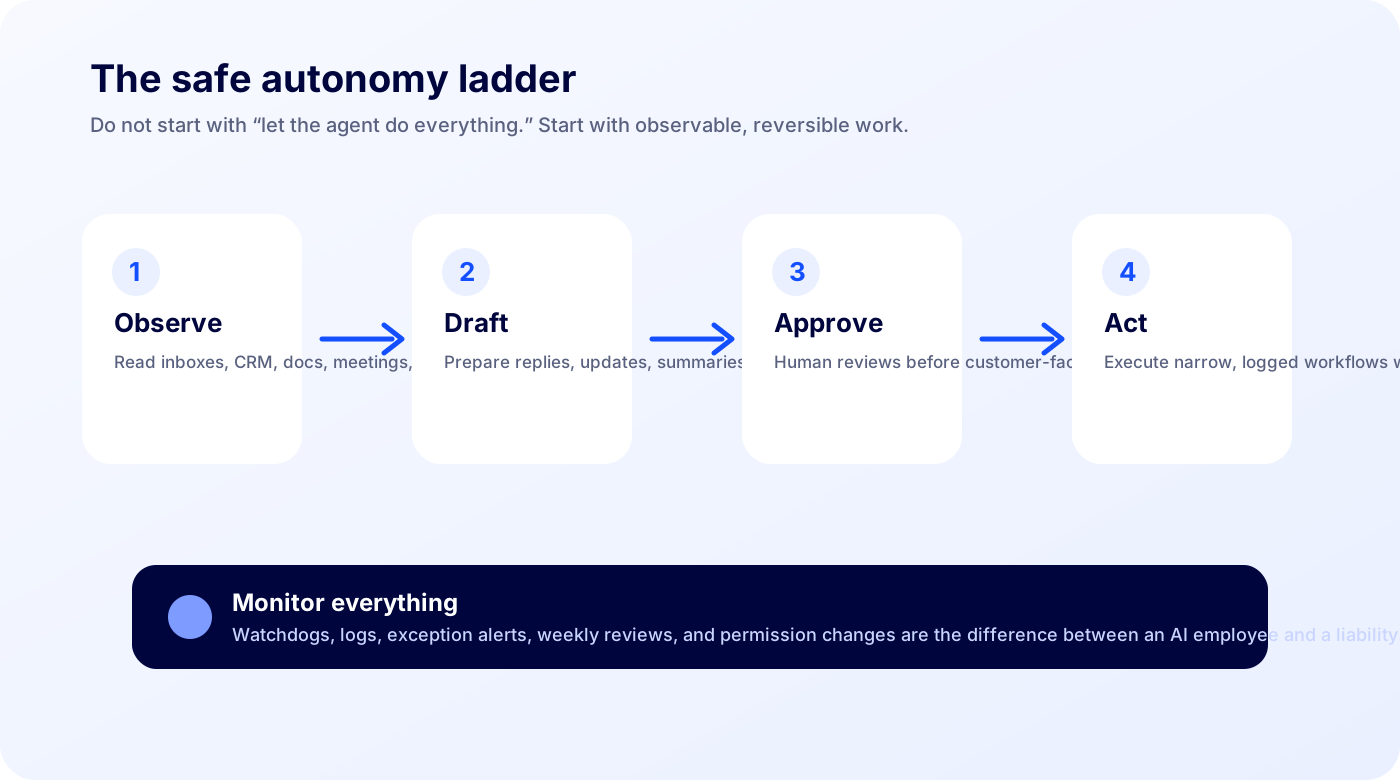
The companies that get AI agents right will not be the ones with the most prompts. They will be the ones with the clearest operating model: what the agent watches, what it drafts, what it can do alone, what requires approval, when it escalates, and how performance is audited.
- Observation layer: what systems the AI can read — inboxes, CRM, docs, call transcripts, task boards, or dashboards.
- Action layer: what the AI can prepare or execute — drafts, notes, reports, reminders, record updates, task creation, or alerts.
- Approval layer: what must be reviewed by a human before it reaches a customer or changes a material system of record.
- Monitoring layer: logs, watchdogs, exception alerts, weekly review, and clear ownership when something breaks.
What this means for revenue teams right now
A revenue team does not need to start by letting an AI close deals or negotiate contracts. The first valuable AI employee should handle the work that is repetitive, high-leverage, and currently leaking between tools: following up with interested prospects, summarizing meetings, preparing account briefs, flagging stuck opportunities, cleaning CRM fields, and turning loose notes into next steps.
That work is perfect for bounded autonomy. It is easy to review, easy to measure, and painful when ignored. If an AI Sales Operator catches five follow-ups that would have been missed, drafts the messages, and gives the rep a morning priority list, the system has already created value before it ever sends anything on its own.
The wrong way to respond: buying another AI tool and hoping adoption happens
Most AI rollouts fail because the buyer purchases software when what they actually need is capacity. A tool gives your team another login. An AI employee needs a job description, onboarding, permissions, quality control, management, and ongoing improvement. Without that layer, the tool becomes another abandoned tab.
“The next competitive edge is not having AI in the stack. It is having AI employees that reliably show up, know the job, respect the limits, and escalate when judgment is required.”
— TGAND Technologies
A practical first deployment
- Pick one role: AI Sales Operator, AI Client Success Manager, or AI Founder Chief of Staff.
- Give it one measurable job: catch dropped leads, prepare account updates, clean CRM notes, or produce a daily founder brief.
- Connect only the minimum tools required for that job.
- Keep customer-facing actions behind human approval until quality is proven.
- Review outputs weekly and improve the workflow like you would manage a real employee.
Robinhood's agent trading rollout is a signal: the market is getting comfortable with AI that acts, not just AI that answers. Businesses should pay attention — but they should not confuse action with maturity. The winning companies will not hand agents the keys and hope. They will install managed AI employees with bounded permissions, visible work, approval gates, and accountability.
Like what you're reading?
Get one practical outbound tip in your inbox every week.